
Top Indicators for Successful Forex Trading 1728525000

When it comes to forex trading, employing the right indicators can make a significant difference in your ability to analyze market trends and make informed trading decisions. Whether you are a novice trader or a seasoned professional, understanding the various indicators at your disposal can help you navigate the complexities of the forex market more effectively. Explore the best indicators for forex trading Trading Platform VN to discover more tools that can enhance your trading experience.
Understanding Forex Indicators
Forex indicators are mathematical calculations based on the price, volume, or open interest of a security. They are typically used to forecast future price movements and to help traders identify buying and selling opportunities. There are two primary categories of indicators: leading and lagging. Leading indicators attempt to predict market movements in advance, while lagging indicators provide signals based on past price movements.
1. Moving Averages (MA)
Moving averages are one of the most popular and widely used indicators in forex trading. They smooth out price data to help identify trends over a specific period. The two most commonly used types of moving averages are the Simple Moving Average (SMA) and the Exponential Moving Average (EMA).
– **Simple Moving Average (SMA)**: This indicator calculates the average price over a specified number of periods. It is useful for identifying long-term trends.
– **Exponential Moving Average (EMA)**: This indicator gives more weight to recent prices and reacts more quickly to price changes, making it valuable for short-term trading.
2. Relative Strength Index (RSI)
The Relative Strength Index (RSI) is a momentum oscillator that measures the speed and change of price movements. It ranges from 0 to 100 and is typically used to identify overbought or oversold conditions in the market.
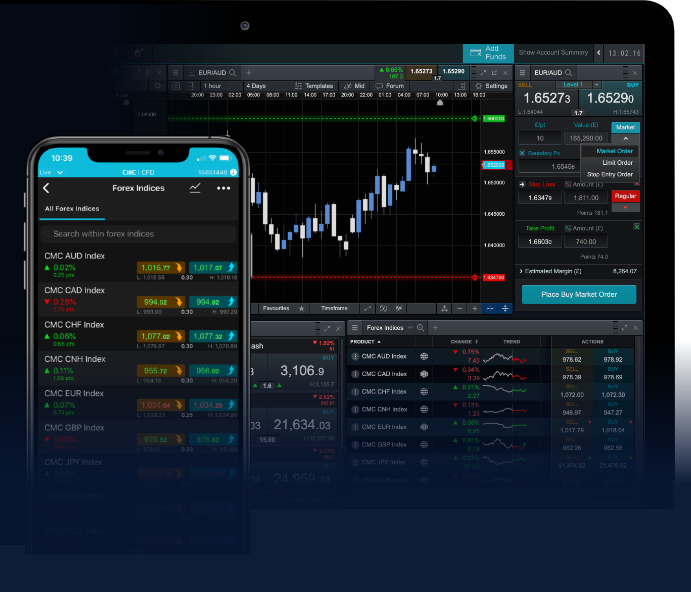
An RSI above 70 generally indicates that a currency pair is overbought, while an RSI below 30 suggests that it is oversold. By incorporating the RSI into your trading strategy, you can better identify potential reversal points in the market.
3. Moving Average Convergence Divergence (MACD)
The MACD is a trend-following momentum indicator that shows the relationship between two moving averages of a security’s price. It consists of three components: the MACD line, the signal line, and the histogram.
Traders use the MACD to identify bullish and bearish momentum, as well as potential buy and sell signals when the MACD line crosses above or below the signal line.
4. Bollinger Bands
Bollinger Bands are a volatility indicator that consists of a middle band (SMA) and two outer bands that are standard deviations away from the middle band. This indicator helps traders identify periods of high and low volatility in the market.
When the price touches the upper band, it may indicate overbought conditions, while touching the lower band may suggest oversold conditions. Traders can use Bollinger Bands in conjunction with other indicators to confirm potential trading signals.
5. Stochastic Oscillator
The Stochastic Oscillator is another momentum indicator that compares a particular closing price of a currency pair to its price range over a specific period. It is also plotted on a scale of 0 to 100.

Similar to the RSI, readings above 80 indicate that a currency pair may be overbought, while readings below 20 suggest it may be oversold. This indicator can help traders identify potential trend reversals.
6. Fibonacci Retracement
Fibonacci retracement levels are horizontal lines that indicate areas of support or resistance based on Fibonacci numbers. These levels are derived from the key Fibonacci ratios, which can help traders identify potential reversal points in the market after a price movement.
Traders often use Fibonacci retracement in conjunction with other indicators to confirm their trading strategies. The key levels to watch out for include 23.6%, 38.2%, 50%, 61.8%, and 100%.
7. Average True Range (ATR)
The Average True Range (ATR) is a volatility indicator that measures market volatility by decomposing the entire range of an asset price for that period. It is particularly useful for setting stop-loss orders and managing risk.
A higher ATR indicates higher volatility, which can signal potential trading opportunities, while a lower ATR suggests a calmer market environment.
Conclusion
In conclusion, incorporating indicators into your forex trading strategies can greatly enhance your ability to analyze market trends and execute trades. Moving Averages, Relative Strength Index, MACD, and other indicators provide valuable insights into market behavior and can help traders make informed decisions. Experimenting with different indicators and understanding their strengths and weaknesses can lead to a more robust trading strategy. Whether you are using Trading Platform VN or any other trading platform, the key to success lies in your ability to analyze data and adapt to changing market conditions.
No Comments